Q & A with Shome Dasgupta
Leave a commentJuly 1, 2024 by The Citron Review
by Charlotte Hamrick
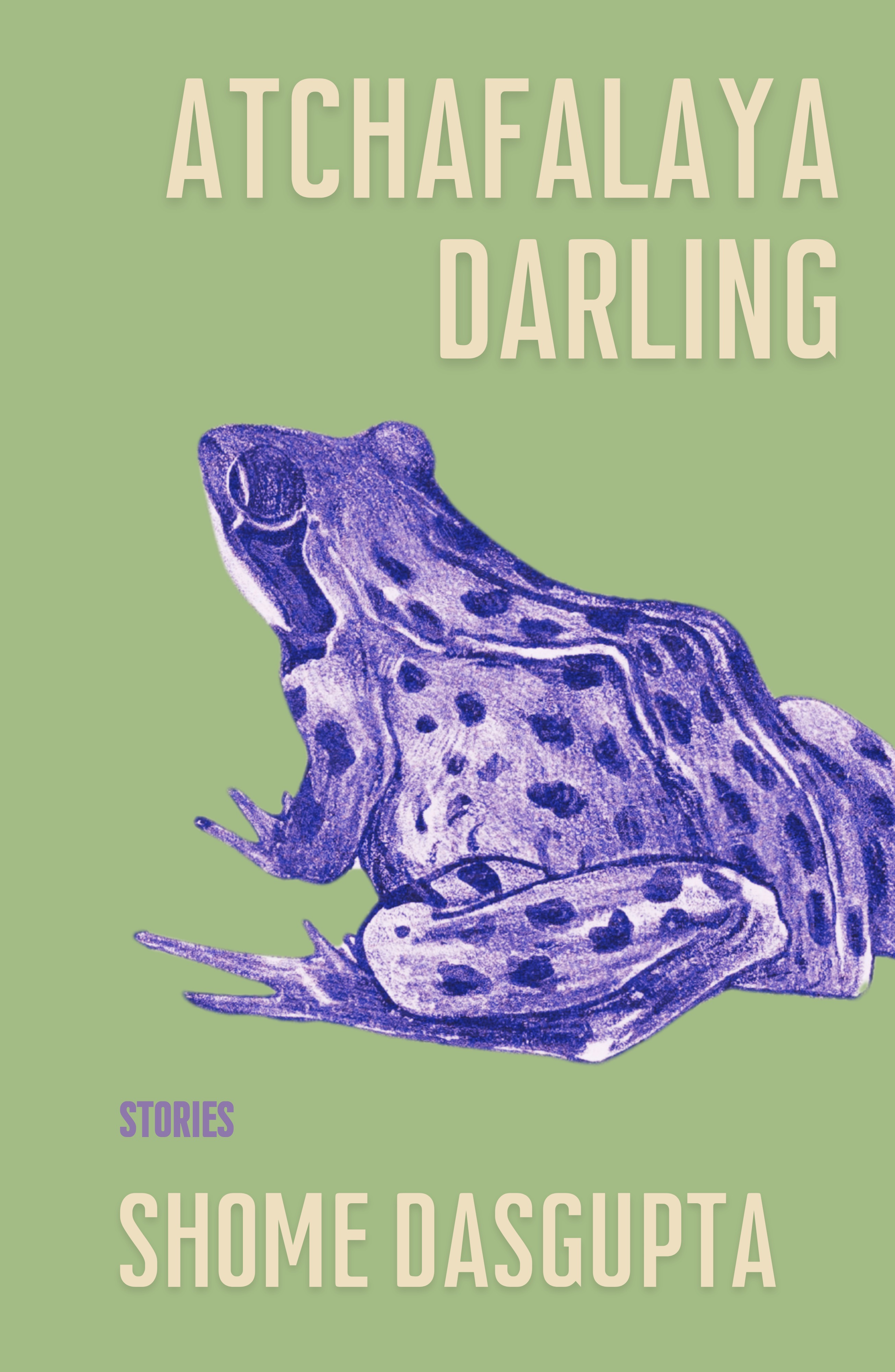 Reading Atchafalaya Darling by Shome Dasgupta (Belle Point Press, 2024), I was drawn into a lyrical world drenched in the beauty and tragedy of human life. Characters in this book are fully fleshed, messy, searching, living, laughing, crying, and loving. Shome embraces the vibrancy that is life in south Louisiana, sharing the quiet moments and the overwhelming moments in stories that are tender yet outspoken. Every story is a star in this galaxy of a book.
*
As I read Atchafalaya Darling, I noticed several recurring themes: loss, grief, family, friendship. I also recognized a strong theme of reconnection between characters which I found to be the most intriguing of all the themes. Talk a little about what reconnection means to you and why you believe it’s an element in your work.
Friendship and family are definitely a very common thread in most of my writing—I would think, and I think when writing about such relationships, those other elements mentioned, such as loss, grief, and love, as well, become inherent or natural. Reconnection can be a way to start all over again—perhaps, a rebirth or rejuvenation, or also a continuation, and for these stories, such an idea, I was striving to show the simplicities and complexities of such a movement. Outside of writing, in my own little world, I’ve had to learn how to reconnect with myself first upon entering a life of sobriety, and from there, learning how to identify with all those all around you, whether longtime friends, new friends, and family members—it’s constantly in fluctuation, per my experience so far, intricate and complicated, and maybe that kind of diffused into these stories, coming from my own life.
I loved the opening story “A Familiar Frottoir” and think it was a perfect choice. How did you decide this was the one to open the book?
Thank you so much! “A Familiar Frottoir” was the last story I had written upon finalizing this collection. I think it’s a nice way to introduce the overall tone of Atchafalaya Darling, including several elements that can be found in bits and pieces of the other stories here. Maybe because it was written last, I was able to draft it that way, however unintentional, but I think the small town setting, its characters, and some of the surreal moments provide an overview of what the collection is about, as a whole.
The confluence of Cajun culture and East Indian culture is so interesting in “The Rock and the River ” and in stories I’ve read in various litmags. You’re educating your readers as well as entertaining them. Is this a deliberate consideration when you write? What do you hope is the take-away for your readers regarding multi-ethnicity?
Thank you so much for the kind thoughts, Charlotte—truly! So, I don’t know if I’m intentionally trying to educate in any of my writing, perhaps more so revealing a bit of the world we live in through words with hopes that a reader can find a connection through this possible engagement. I would think, more so, that I’m trying to entertain—for engagement and ideally to create some interest. Maybe through this interest, a relationship can be formed between the reader and the stories where such revelations can be found. For this particular collection, when it comes to cultures and multi-ethnicity, I think the idea of seeing or understanding similarities through differences—a way to connect and understand each other regardless of where we come from, and living in Lafayette, LA—immersed in Cajun culture specifically as a Bengali kind of provided a pathway for me, personally, to realize such mirroring.
Revealing is a more personal and inviting description of what you do. Well said!
I remember reading “By the Pond Back Home” in Poverty House, a powerful story of living through and struggling out of addiction. It’s the story of Turnip but I was also drawn into the quieter story of Margaret, of how important love and support is to overcome addiction. What were your thoughts about that while writing this story, and in general?
Conversely to “A Familiar Frottoir,” “By The Pond Back Home” was the first story I had written for Atchafalaya Darling—at the point, I didn’t know that I was embarking on a collection ofstories, but “By The Pond Back Home” was a story I always wanted to write after leaving rehab. While I was there and as I was working the program, I learned about Al-Anon which is for family members of those going through addiction of any sort. It can be such a delicate and tough situation, emotional for all those involved, and once I strived to be unselfish, being more aware of those around me and how I’ve affected them—this is where Margaret comes in. The story itself just flowed out of me with ease—it’s the first short story, like a full short story length short story I had written since becoming sober—roughly five or so years later, at that time, and the typing was incessant. It was all inside me rushing to get out.
Have you thought about writing Margaret’s story of coping with the consequences of Turnip’s touring lifestyle and addiction?
Oh wow—I actually haven’t thought about that. I’m not sure if I would’ve been able to, though—in “By The Pond Back Home,” Margaret was generally characterized on the surface level with some indirect internalizations taking place—those that I think we can all understand and relate to, ideally. To go deeper than that, I don’t think I would be able to truly represent the complexities of being on that side of a relationship, going through such obstacles.
“Opelousas Electric” is a tender yet powerful story. The love between Basin, Calais, and Houma is absolutely electric and I’m in awe of how you accomplished this extraordinary story. Please tell us a little about the creation of it. And, by the way, it’s a perfect end to the book!
Thank you! Basin was so much fun to write—his character really made me happy and at ease. I guess maybe it’s about worlds within worlds, such as Basin’s world in the dryer and the world in his head, and there’s Calais and her reality, along with Renee, and then Houma’s world, encompassing the universe, essentially, and how it’s all connected through electricity, perhaps. The idea of the story started off with picturing Basin playing inside a dryer which was kept in the yard, and it just kind of went from there, not knowing which direction it was going until the next sentence was written.
Tell us a little about your writing routine as you were working on the manuscript.
I think it was just writing a bit each day—if I’m remembering correctly, for the first draft, each story roughly took a week or so, maybe a little more. Some days, I was able to get a good bit down, other times, maybe a sentence or a paragraph, but that’s for just drafting a story. It kind of depended on what was going on in my day. There were certainly some gaps between writing each one, but once I started on an idea, I tried to write a bit each day because I found it to be so relaxing, and I was so excited about the potential for each story. I became obsessed with whichever idea I was exploring—in a good way, so I was looking forward to it every day.
What is the most valuable piece of advice you’ve been given about the craft of writing?
I think the ones that I connect to the most are essentially variations of taking care of yourself and finding a way to share love and kindness.
Shome, thank you so much for talking to me about Atchafalaya Darling. I am so honored to have read an advanced copy and I’m certain it will be a hit.
Thank you so much, Charlotte! I can’t tell you how much this means to me and Belle Point Press—your encouragement is so greatly appreciated, and thanks again, so much, with navigating a path in getting this book out there.
Pre-orders are available at Belle Point Press. Publication is set for July 9, 2024.
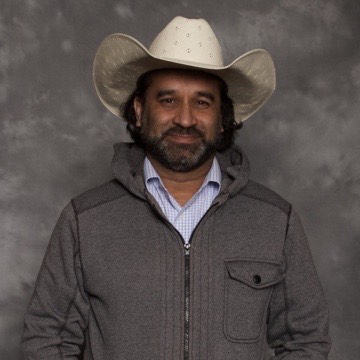 Shome Dasgupta is the author of The Seagull And The Urn (HarperCollins India), and most recently, the novels The Muu-Antiques (Malarkey Books) and Tentacles Numbing (Thirty West), a prose collection Histories Of Memories (Belle Point Press), a short story collection Atchafalaya Darling (Belle Point Press), and ha poetry collection Iron Oxide (Assure Press). His first book i am here And You Are Gone won the 2010 OW Press Fiction Contest. His writing has appeared in McSweeney’s Internet Tendency, New Orleans Review, The Emerson Review, Jabberwock Review, American Book Review, Arkansas Review, Magma Poetry, and elsewhere. He lives in Lafayette, LA and can be found at shomedome.com and @laughingyeti.
Charlotte Hamrick enjoys talking to writers about writing. She reads, writes, and photographs extraordinary everyday things in New Orleans. Recent work has been published or is forthcoming in Best Small Fictions 2022 and 2023, Still: The Journal, Louisiana Literature, BULL, and Emerge Literary Journal. She writes in her free Substack, The Hidden Hour and her website is charhamrick.com.


